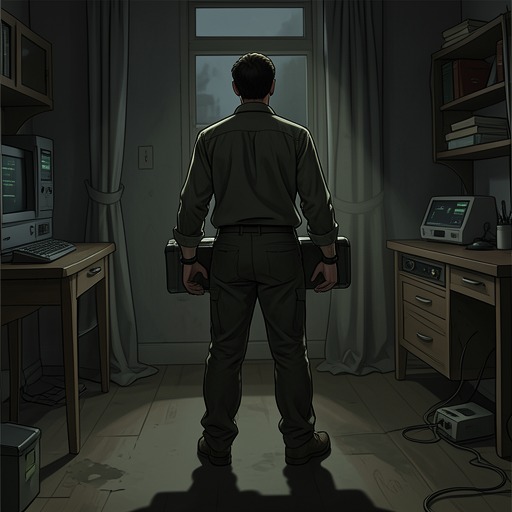
Alcohol dependence and sobriety
Call Me YoursAlcohol dependence and sobriety shape two contrasting lives that are eventually revealed as parts of Jamie Cooper’s dissociative identity: Chris Davis has maintained a year of sobriety, while Don drinks on the job and is fired for misconduct tied to alcohol. The contrast makes recovery more than a private matter of self-control. Chris’s past follows him into work and threatens his fragile stability; Don’s drinking repeatedly collides with employment, money, and other people. Their histories give the novel a divided portrait of addiction, concealment, and the precarious work of staying sober.
Chris Davis: Recovery and Its Uncertain Past
Chris’s sobriety is concrete but uneasy. He has been sober for a year, has not blacked out for days, and says he has stopped taking things that do not belong to him. Those gains matter because his earlier drinking left a troubling blank in his memory. At one point he found a pearl necklace beneath his mattress and could not tell whether he had stolen it while intoxicated. Needing rent money, he pawned it and survived on the proceeds for six months, although he believed he should have found its owner. The necklace condenses the problem sobriety cannot undo: Chris is no longer drinking, but he still has to live with actions he cannot confidently remember and consequences he cannot repair.
The damage also follows him professionally. Chris lost a previous job after his employers learned about his drinking problems and began asking questions. At his hotel workplace, Blake Anderson’s questions about his mental health revive the fear that the same exposure will cost him another position. Blake has already singled Chris out at a staff meeting, questioning why a janitor is present and implying that his physical condition makes him a liability. After Blake leaves, Chris goes into a restroom and sobs; the humiliation intensifies his sense that even his existence is something for which he must apologize. His fear of being investigated is therefore rooted in experience: disclosure has previously led to dismissal, and he believes that knowledge of his past could doom him again.
Material Precarity and Everyday Support
Chris’s recovery exists alongside immediate financial strain rather than apart from it. When Jessica Cooper apologizes for Blake’s treatment and offers to arrange coverage for Chris’s shift so he can rest, he warms his cold fingers around a cup. His stomach growls: he has eaten nothing since the previous morning’s breakfast because he spent his last money on A4 paper after running out. The scene places bodily need and recovery within the same narrow margin of survival. A year without alcohol is a significant change, but it does not provide food, rent, or protection from workplace judgment.
Jessica’s response briefly offers practical care as well as sympathy. She tells Chris that Blake does not know how hard he works and offers him a quiet place to enjoy his drink. The gesture does not erase the power imbalance at work or the risk of his history being exposed; it does, however, contrast with the earlier public humiliation. Chris’s thank-you and his attempt to draw warmth from the cup are small, guarded acts of acceptance. The narrative presents support not as a cure but as temporary room to recover his composure without having to defend himself.
Don’s Drinking and Loss of Work
Don’s alcohol use is shown in direct conflict with the conditions of his job at a bar. He smokes and takes swigs from a flask while on duty, checking over his shoulder because his boss, Big Mike, forbids employees from drinking or smoking at work and can fire them immediately. Don says he does not care about the job, though its modest pay covers cheap motels and a decent meal. The flask is both evidence of his disregard for the rule and a sign of how little security the job provides: losing it threatens even basic shelter and food.
Big Mike eventually fires Don after throwing the flask across his desk. Don protests that he has not been drunk at work since earlier episodes in which he became intoxicated and punched customers who crossed him. He acknowledges taking a few mouthfuls of liquor, but Big Mike’s account is more damning: he accuses Don of stealing liquor, breaking a customer’s nose the previous day, and slapping his girlfriend the day before that. The clash leaves a pointed distinction between Don’s claim about not getting drunk and the continuing pattern of alcohol-related misconduct alleged by his employer. Whatever Don’s own defense, the flask and the firing make clear that his drinking has become inseparable from the loss of his livelihood.
The Alters and the Meaning of the Contrast
The later revelation that Chris Davis and Don are among Jamie Cooper’s alters changes the frame around these separate histories. Jessica Cooper identifies both men, along with Little Jay, as parts of Jamie’s divided identity. The novel thus places Chris’s sobriety and Don’s drinking within one life without making their experiences interchangeable: one identity is struggling to preserve a year of recovery and conceal a past, while another drinks during work and loses a precarious job. Their contrast makes the question of recovery more complicated than a simple opposition between success and failure. It is also a contrast between different forms of exposure: Chris fears that others will discover his former drinking, while Don’s conduct is visible enough to provoke immediate punishment.
Across both strands, alcohol is bound to memory, livelihood, and social judgment. Chris cannot establish what happened during an intoxicated blackout, and his uncertainty about the necklace persists after he becomes sober. Don’s drinking, by contrast, is witnessed in the present and attached to a chain of workplace accusations and consequences. The eventual disclosure of their shared identity does not dissolve those differences; it makes their coexistence part of Jamie’s story. Sobriety appears as a hard-won but vulnerable interval, while dependence remains a force that can damage employment and deepen material insecurity.